

Women in Mining
Sep 11, 2023 / 6 Min Read
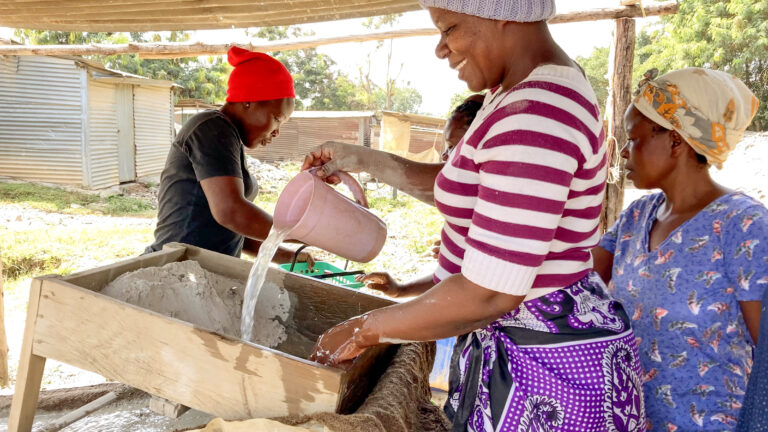
Women in Mining
Women play a critical role in the global mining sector, particularly within Artisanal and Small-Scale Mining (ASM) communities. According to estimates from the World Bank, between 20 and 30 million people participate in ASM activities worldwide, with women accounting for between 10% and 50% of the workforce in many regions.
Despite their significant contribution, women often face barriers that prevent them from accessing opportunities within formal large-scale mining operations. As a result, many turn to artisanal and small-scale mining as a source of income, working alongside family members and local communities to support household livelihoods.
For many women, mining represents one of the few available economic opportunities. However, while the sector provides employment and income, it can also expose women to a range of social, economic, and health challenges that limit their ability to achieve long-term financial security and wellbeing.
Challenges Facing Women in Mining
Women working in artisanal and small-scale mining often carry a dual burden. In addition to their mining responsibilities, many continue to manage household duties, childcare, and family obligations.
Although women frequently work similar hours to men, they often receive significantly lower compensation. In many mining communities, women are restricted to lower-paying activities such as ore transportation, washing, sorting, and processing, while higher-paying excavation and extraction roles remain largely dominated by men.
This unequal distribution of opportunities contributes to a persistent income gap and limits women’s economic independence.
Additional challenges may include:
Limited access to land and mining rights.
Restricted participation in decision-making processes.
Lack of financial resources and credit facilities.
Limited access to training and technical skills development.
Reduced control over mining revenues and resources.
In regions where alternative employment opportunities are scarce, many women have little choice but to continue working in difficult and often unsafe conditions.
Economic Inequality and Financial Vulnerability
Income inequality remains one of the most significant issues affecting women in mining communities.
Research has shown that women often work longer hours than their male counterparts while earning substantially less. Lower earnings combined with ongoing household responsibilities can create a cycle of financial vulnerability that is difficult to escape.
This disparity may force women to seek additional income sources to support themselves and their families. As a result, some women take on multiple jobs, work extended hours, or engage in higher-risk activities to make ends meet.
Improving women’s economic participation and ensuring equal access to opportunities is essential for reducing poverty and promoting sustainable community development.
Health and Safety Risks
Artisanal mining environments often present serious health and safety challenges, particularly for women.
Compared to large-scale mining operations, artisanal mining typically has:
Limited safety regulations.
Minimal protective equipment.
Poor infrastructure.
Reduced access to healthcare services.
Inadequate training on occupational safety.
Many women work in mineral processing, a critical stage of mining that can involve exposure to hazardous substances and unsafe working conditions.
Long working hours, physically demanding tasks, and limited access to protective equipment increase the risk of injury and illness. Pregnant women and mothers are often particularly vulnerable, as many continue working throughout pregnancy due to economic necessity.
Creating safer workplaces is therefore essential for protecting women and improving long-term community wellbeing.
Increasing Women’s Representation in Leadership
Empowering women also requires greater participation in leadership and decision-making roles.
Historically, women have been underrepresented in mining governance structures, cooperative management, and community leadership positions. Increasing female representation helps ensure that the needs and perspectives of women are reflected in organizational decisions.
Promoting women into management and board positions can:
Encourage gender equality.
Improve organizational transparency.
Strengthen community engagement.
Support more inclusive decision-making.
Create role models for future generations.
Building stronger representation helps create mining communities that are more equitable, accountable, and sustainable.
Supporting Alternative Livelihood Opportunities
While mining remains an important source of income, many women seek opportunities beyond the sector.
Investing in diversified business activities can provide women with alternative sources of employment and reduce economic dependence on mining alone.
Potential opportunities include:
Agriculture and food production.
Small-scale manufacturing.
Retail businesses.
Community services.
Entrepreneurship programs.
Women’s cooperatives and enterprises.
Supporting women-led businesses can stimulate local economic growth while creating safer and more stable employment opportunities.
Women in Mining Support Services
The economic impact of women extends far beyond direct mining activities.
As mining incomes increase, local businesses that support mining communities also benefit. Many women operate or work within support industries such as:
Food preparation and sales.
Clothing and retail businesses.
Transportation services.
Community markets.
Small-scale trade enterprises.
Strengthening these support sectors creates additional opportunities for income generation while contributing to broader community development.
Building a More Inclusive Mining Future
Women have always been a vital part of mining communities, yet their contributions have often been overlooked or undervalued. Creating a more inclusive mining sector requires ongoing efforts to improve safety, reduce inequality, expand leadership opportunities, and support economic empowerment.
By investing in healthier processing methods, promoting women into leadership positions, supporting alternative livelihoods, and expanding access to training and education, mining communities can unlock the full potential of their workforce.
A stronger role for women in mining benefits not only individual workers but also families, communities, and the broader economy. Building a safer, fairer, and more inclusive mining sector is essential to achieving sustainable development and creating lasting positive change for future generations.
Start today,
Impact tomorrow
Start today,
Impact tomorrow